


Inherent Tradeoff between Nutrition and Safety
Published on May 12, 2026
Nutritional Integrity vs. Safety Considerations
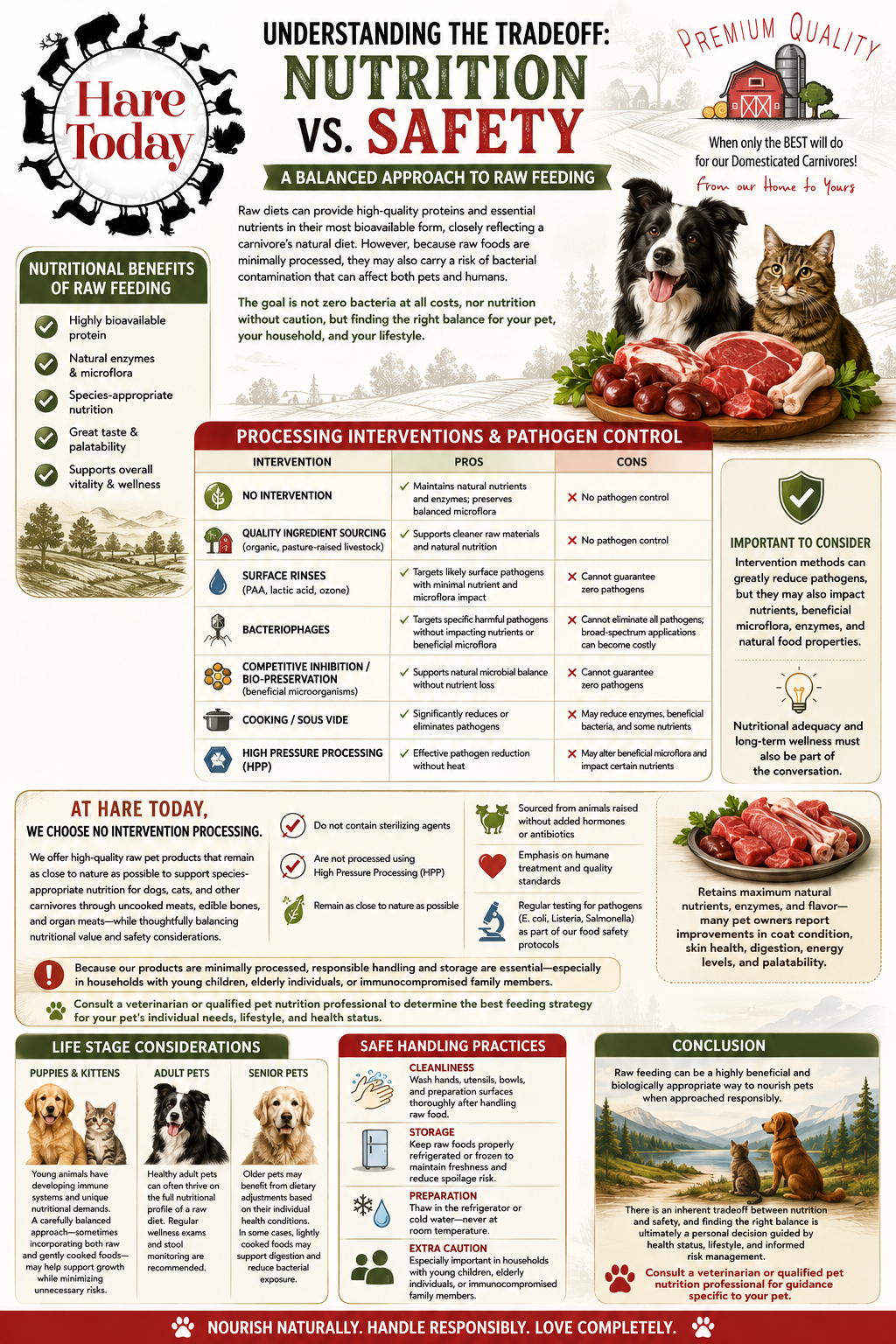
Raw diets can provide high-quality proteins and essential nutrients in their most bioavailable form, closely reflecting a carnivore’s natural diet. However, because raw foods are minimally processed, they may also carry a risk of bacterial contamination that can affect both pets and humans. For this reason, selecting responsibly sourced ingredients, prioritizing your pet’s overall health, and practicing safe handling procedures are all essential when feeding raw.
Achieving the right balance between nutrition and safety is one of the most important considerations in pet food manufacturing. Different processing methods can reduce pathogen risks, but they may also affect the nutritional integrity, beneficial microflora, enzymes, and natural properties of the food. Understanding these tradeoffs can help pet owners make informed decisions about what is best for their pets and households.
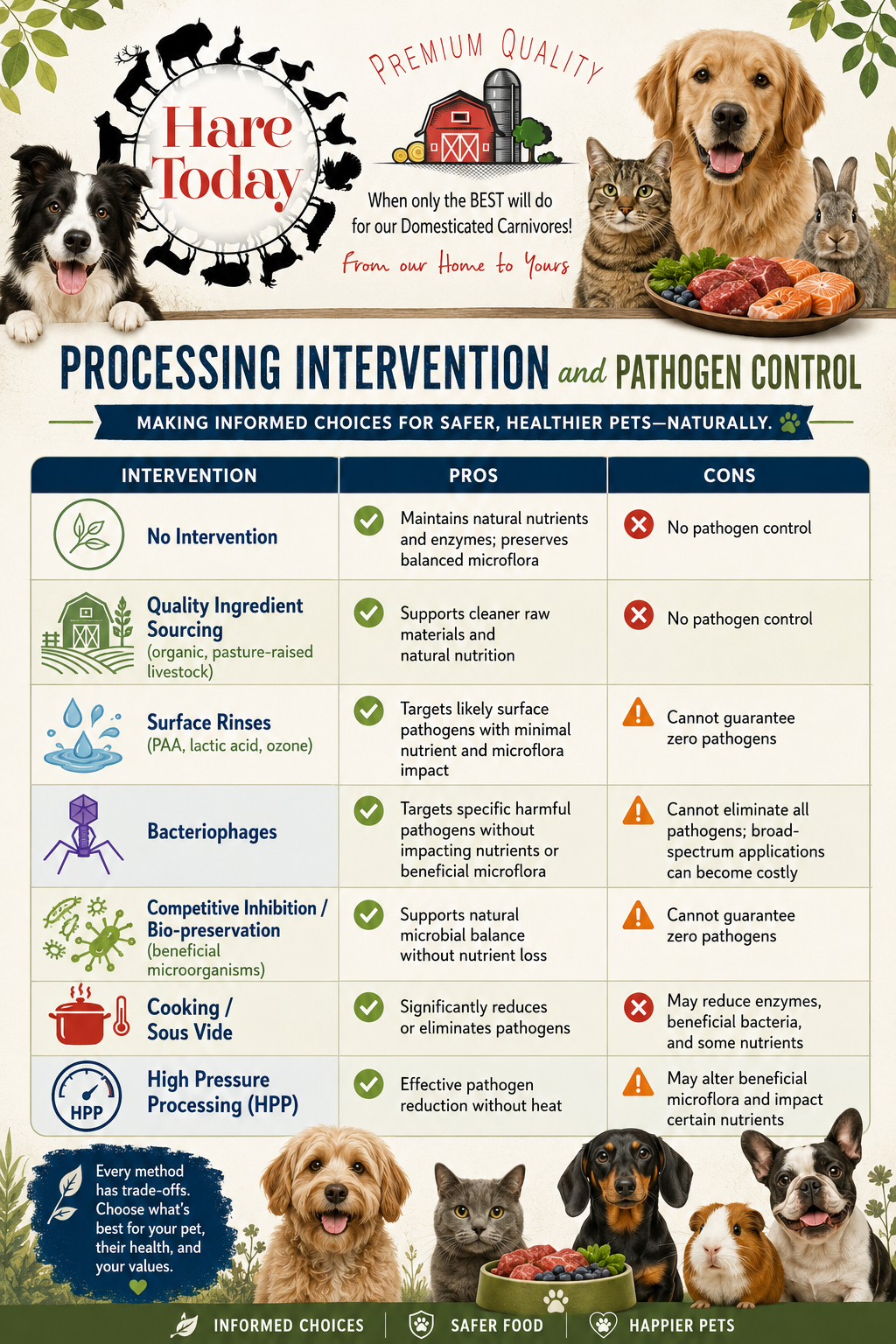
Processing Intervention and Pathogen Control
Let’s face it, we do not live in a sterile environment, and bacteria are a natural part of life. While intervention methods can greatly reduce pathogens, it is important to ask: at what cost? If food is rendered “safe” through aggressive processing but loses valuable nutrients and biological integrity in the process, does that truly eliminate risk?
Nutritional adequacy and long-term wellness must also be part of the conversation.
At Hare Today, we choose to offer high-quality raw pet products with no intervention. This aligns with our mission is to support species-appropriate nutrition for dogs, cats, and other carnivores through uncooked meats, edible bones, and organ meats while thoughtfully balancing nutritional value and safety considerations.
This means our products:
- Do not contain sterilizing agents
- Are not processed using High Pressure Processing (HPP)
- Remain as close to nature as possible
To support safety, we prioritize responsible sourcing and strict manufacturing practices. Our raw materials are sourced from animals raised without added hormones and are free of antibiotics at time of slaughter, with an emphasis on humane treatment and quality standards. We also conduct regular testing of our products for pathogens such as E. coli, Listeria, and Salmonella as part of our ongoing food safety protocols.
Because our products are minimally processed, they retain maximum levels of natural nutrients, enzymes, and flavor. Many pet owners report improvements in coat condition, skin health, digestion, energy levels, and palatability when feeding a raw diet that closely resembles a natural carnivorous diet.
At the same time, feeding minimally processed raw food requires responsible handling and storage practices. This is especially important in households with young children, elderly individuals, or immunocompromised family members. Raw pet food should be handled with the same level of care and cleanliness used when preparing raw meat for human consumption.
Ultimately, choosing a minimally processed raw diet depends on a pet owner’s ability to manage handling risks while embracing the potential benefits of a more natural feeding approach. Consulting with a veterinarian or qualified pet nutrition professional can help determine the best feeding strategy for your pet’s individual needs, lifestyle, and health status.
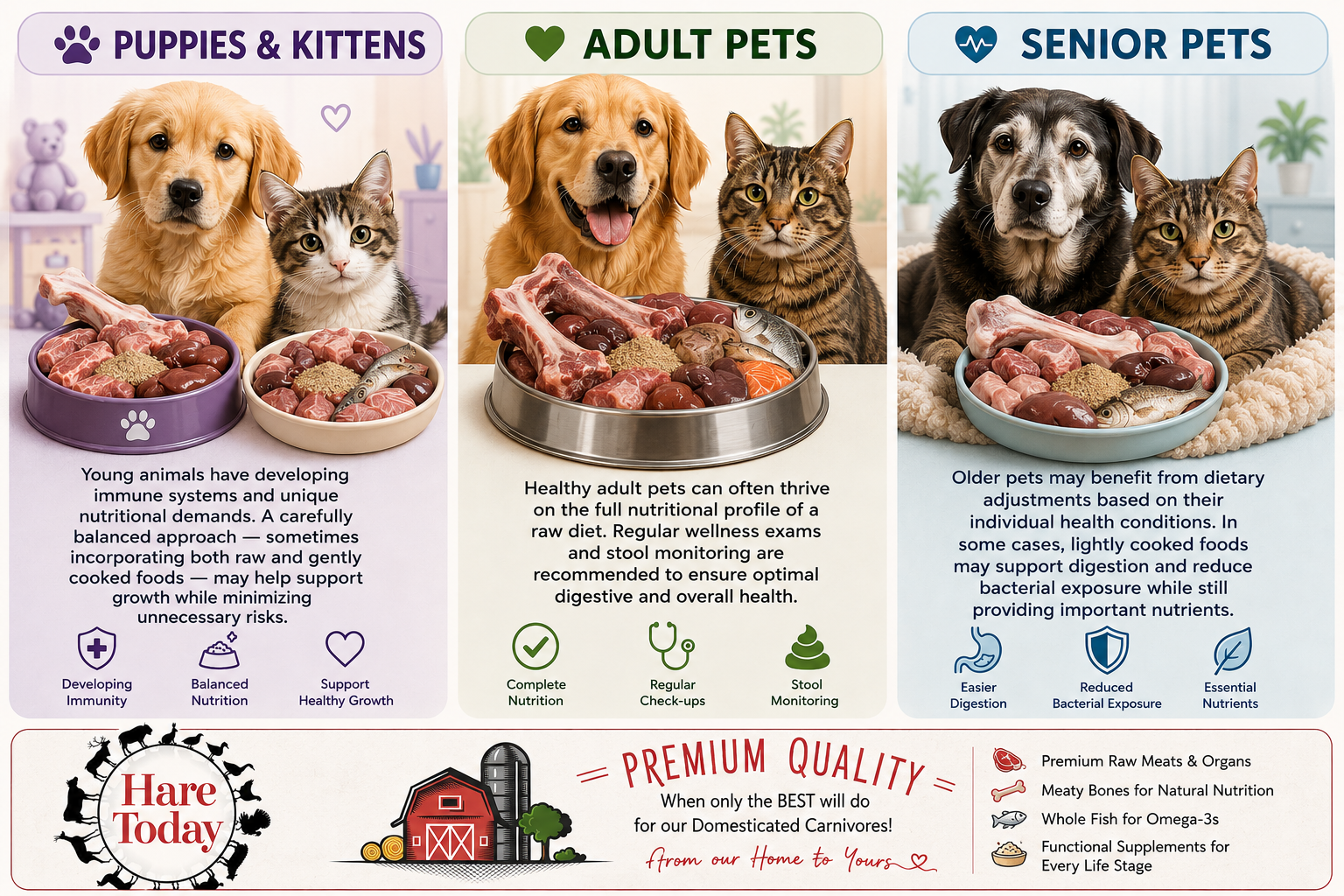
Life Stage Considerations
Puppies and Kittens
Young animals have developing immune systems and unique nutritional demands. A carefully balanced approach — sometimes incorporating both raw and gently cooked foods — may help support growth while minimizing unnecessary risks.
Adult Pets
Healthy adult pets can often thrive on the full nutritional profile of a raw diet. Regular wellness exams and stool monitoring are recommended to ensure optimal digestive and overall health.
Senior Pets
Older pets may benefit from dietary adjustments based on their individual health conditions. In some cases, lightly cooked foods may support digestion and reduce bacterial exposure while still providing important nutrients.
Safe Handling Practices
Cleanliness
Wash hands, utensils, bowls, and preparation surfaces thoroughly after handling raw food.
Storage
Keep raw foods properly refrigerated or frozen to maintain freshness and reduce spoilage risk.
Preparation
Some pet owners choose to lightly cook specific ingredients or new proteins to balance digestibility, nutrition, and safety.
Conclusion
Raw feeding can be a highly beneficial and biologically appropriate way to nourish pets when approached responsibly. The goal is not simply eliminating all bacteria, nor preserving nutrition at all costs, but thoughtfully balancing both nutrition and safety based on the individual pet and household.
For healthy animals, minimally processed raw diets may offer significant nutritional advantages. However, in pets with compromised immune systems or specific medical conditions, additional safety measures — including gentle cooking — may be appropriate. There is an inherent tradeoff between nutrition and safety, and finding the right balance is ultimately a personal decision guided by health status, lifestyle, and informed risk management.
Additional Consideration
Merriam-Webster defines “safe” as “free from harm or risk.” Within the pet food industry, this definition raises important questions. The U.S. Food and Drug Administration (FDA) currently maintains a zero-tolerance policy for certain bacteria in ready-to-eat foods, including pet food. While this policy is designed to protect both pets and humans, achieving zero detectable pathogens often requires processing interventions that may alter the nutritional and biological qualities of the food.
As pet owners evaluate feeding choices, it is important to consider both microbial safety and nutritional integrity as part of the broader definition of health and wellness.
 Back to Blog Index